
Farmers' Almanac Winter 2026–2027 Forecast: Regional Contrasts, El Niño, and What to Check Instead
By FriendPet Team · 2026-08-14 · 10 min

The Farmers' Almanac dropped its 2026–2027 winter outlook in early August 2026, and the headline theme is blunt: a winter of sharp regional contrasts. Some parts of the country may see repeated storms, raw rain, and heavy wet snow. Others could sit in milder stretches until a fast cold snap rewinds the week.
USA Today summarized the same picture — an active southern storm track, quick northern bursts of snow and cold, and a Northeast that may flip between rain, sleet, ice, and accumulating snow depending on a storm's final mile. If you live in a region where winter planning starts in August, this is the kind of read people keep open in a second tab while they compare notes with neighbors.
One note up front: this article is about Farmers' Almanac (the publication founded in 1818, forecaster "Caleb Weatherbee," the August print edition). It is not the same brand as Old Farmer's Almanac, which publishes its own separate long-range outlook. The names sound alike; the forecasts do not always agree. When someone says "the almanac says…," ask which one they mean.
What Farmers' Almanac is actually claiming
The Almanac describes its method as a mix of historical pattern weighting, solar and lunar cycles, and modern inputs like satellite data and ocean-atmosphere signals. It publishes broad regional themes months ahead — useful for conversation and early planning, not a substitute for day-of guidance.
For 2026–2027, the through-line is contrast: wet and stormy in the South, near-normal but volatile in much of the North, and especially messy precipitation types along the East Coast. Temperatures hovering near freezing make the rain-versus-snow call harder than a clean cold winter would.
El Niño and the southern storm track
El Niño is expected to stay influential through the heart of the season. In plain terms, that often tilts the southern United States toward wetter-than-normal conditions.
Farmers' Almanac draws an active storm track from Southern California and the Desert Southwest through Texas, the Gulf Coast, and the Southeast. The outlook mentions frequent systems, muddy fields, and occasional surges of colder air sliding south. When cold meets Gulf moisture, the publication warns some storms could bring sleet, freezing rain, or heavy wet snow — the kind of wintry mix that snarls bridges before anyone agrees on totals.
Mountain snow gets a brighter note in the southern Rockies, where above-average snowfall is on the table. If your winter plans hinge on ski passes in that band, the Almanac's tone is more optimistic than along the Gulf.
USA Today echoed the same southern-tier framing: El Niño as a backdrop, more storm energy across the Sun Belt, and a reminder that "wetter" does not always mean "snowier" at sea level.
North and Midwest: near-normal on paper, jumpy in practice
Across much of the West, northern Plains, Upper Midwest, and Great Lakes, Farmers' Almanac expects temperatures to average near normal. That average hides the part that actually affects commutes: fast-moving clippers, sudden cold snaps, snow squalls, and blustery winds punctuated by milder breaks.
The middle of the country may see frequent swings between thaw and freeze, which is brutal for roads, farm lanes, and anyone guessing whether black ice returns overnight. USA Today's regional recap noted quick-moving northern storms and periods of bitter cold even when the seasonal math looks ordinary.
If you are in Minneapolis, Chicago, or Denver-adjacent foothill towns, read "near normal" as high variance — not a license to skip the scraper.
Northeast: coast versus inland, January–February in focus
The Northeast is where the Almanac gets most cautious. Coastal communities may see more rain or mixed precipitation, while inland areas could face several rounds of heavy, wet snow, with January and February called out as especially active.
Small shifts in storm track or a degree of temperature change can flip the outcome: cold rain, sleet, freezing rain, or plowable snow. Farmers' Almanac explicitly tells readers to expect forecasts to change quickly as storms approach — which is good advice no matter who wrote the seasonal outlook.
A secondary storm path along the Eastern Seaboard could bring additional rain, wintry mixes, and snow from the mid-Atlantic into New England. If you split time between Boston and Hartford, or Philadelphia and the Poconos, the same storm name on TV may mean different shovel duties.
Pacific Northwest and the drier northern pockets
The Pacific Northwest may see a more changeable, less dependable snow season in the Almanac's read. Meanwhile, the northern Plains and Upper Midwest could turn drier at times, especially when the southern storm track dominates — though brief intense cold, wind, and snow remain possible.
That split is another example of the "contrasts" headline: not one national story, but several regional ones happening at once.
Important disclaimer: folklore-style outlook, not NOAA
Farmers' Almanac is a long-range, folklore-leaning seasonal outlook. It is not an official forecast from the National Weather Service (NWS) or NOAA.
For real warnings — winter storm watches, ice storm advisories, flood guidance, wind chill alerts — use weather.gov and your local NWS office. Check forecasts again 24–48 hours before travel, and again the morning of. The Almanac can help you think about winter in August; NWS products tell you whether Tuesday's commute is safe.
Independent reviews of Almanac accuracy over the years often score it above random chance on broad regional themes but well below short-range meteorology. Treat the 2026–2027 read as planning color, not a promise.
How to use this forecast without overreacting
A practical August checklist:
- Know your region's theme — wet South, volatile North, tricky Northeast, changeable Northwest.
- Separate brands — Farmers' Almanac vs Old Farmer's Almanac vs your local TV long-range segment.
- Plan gear, not panic — snow shovel, rain boots, ice scraper; the Almanac's own closing line suggests you may need all three this winter.
- Bookmark NWS — official alerts beat any almanac when a storm is 48 hours out.
- Revisit in November — seasonal outlooks are conversation starters; November jet-stream trends matter more for holiday travel.
If you manage property, livestock, or a fleet, the southern-tier wet signal is a prompt to check drainage and salt inventory early, not proof of a blizzard week.
A small companion while forecast tabs stay open
Reading the Almanac page, USA Today recap, and a local news rewrite usually means three or four tabs and a weather map you refresh out of habit. If you want quiet company on those pages — without turning a storm map into merch — FriendPet can turn a photo you own or have permission to use into a webpage desk pet.
Your first desk pet can be created free (welcome credits after sign-in). It is not official weather gear; it is a browser companion while you compare regional maps.
How to make one
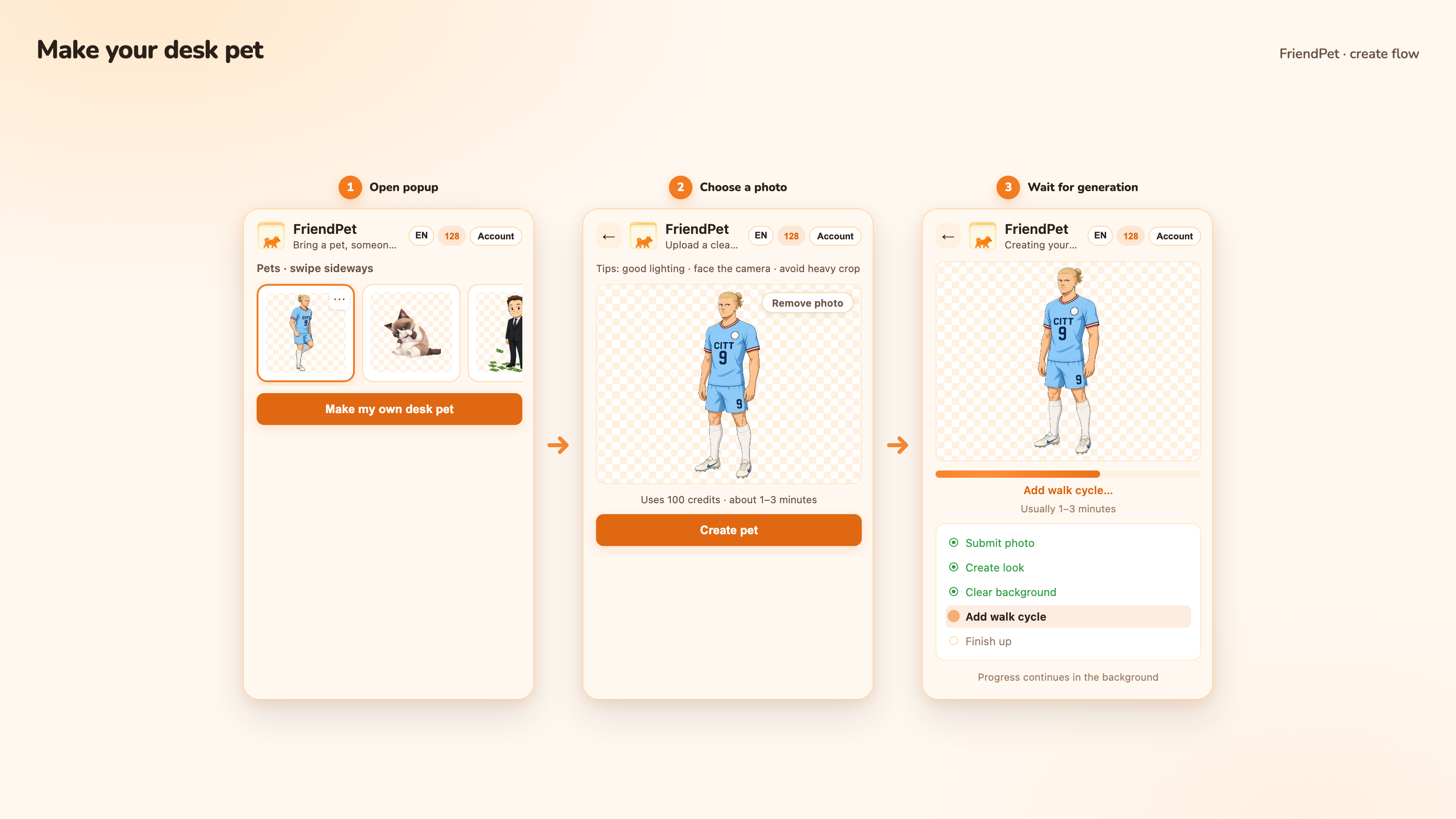
- Open the FriendPet popup — try a built-in pet, or tap Make my own desk pet.
- Choose a clear photo, then tap Create pet.
- Wait 1–3 minutes (it can keep going in the background).
Enable it — and what you get
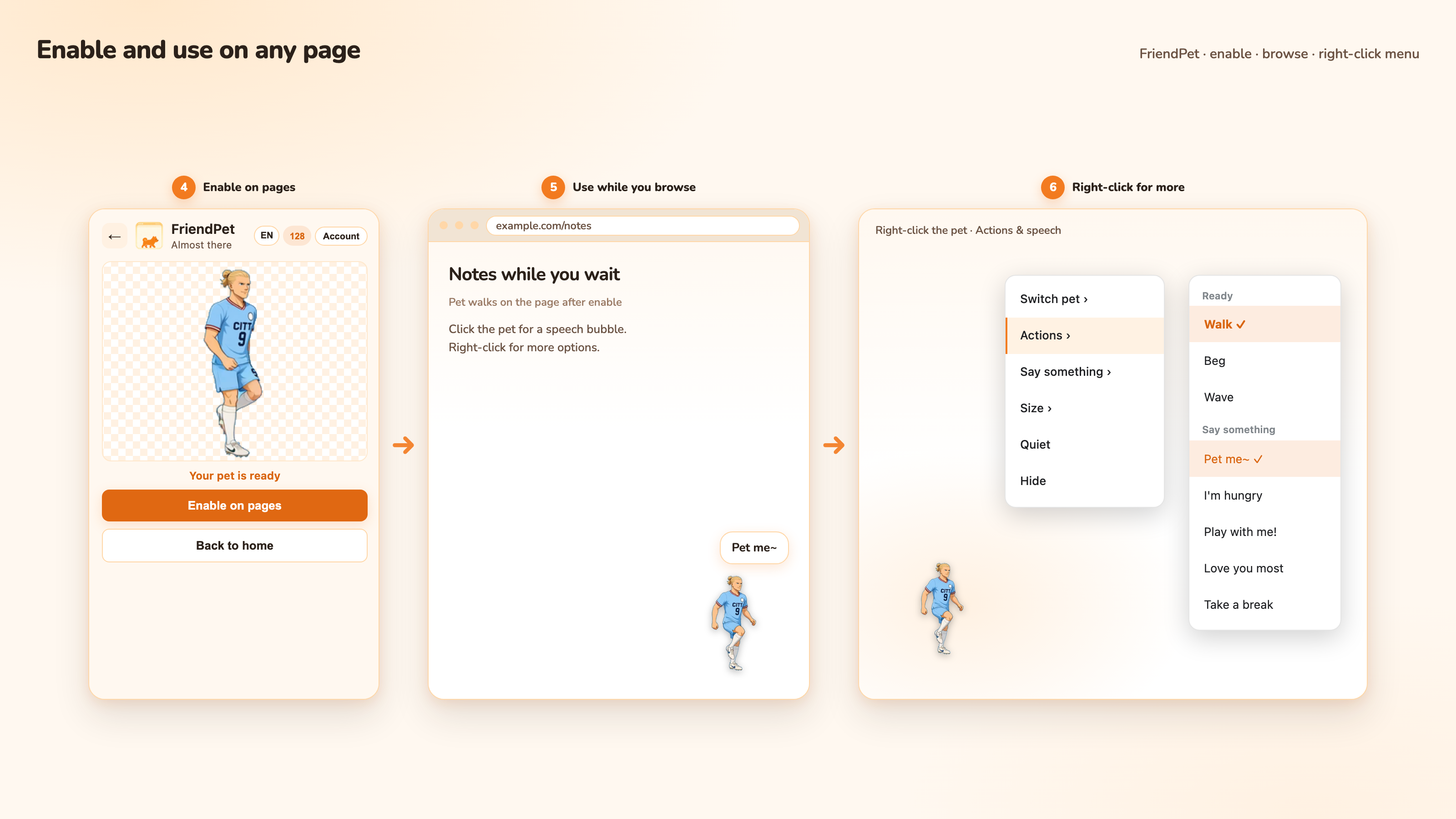
- When you see Your pet is ready, tap Enable on pages.
- On a normal tab, click for a speech bubble; right-click for actions, presets, quiet, or hide.
Start with a free first pet, then download the extension.
Freecreate your first desk pet
FAQ
Is Farmers' Almanac the same as Old Farmer's Almanac?
No. They are separate publications with different forecast methods. This article covers Farmers' Almanac (farmersalmanac.com). Old Farmer's Almanac releases its own winter outlook and may disagree region by region.
Does El Niño guarantee a wet winter everywhere?
No. El Niño tilts odds toward wetter conditions across much of the southern U.S. in many seasons, but local results still depend on individual storm tracks and temperature profiles.
Should I trust this over the National Weather Service?
No. Use Farmers' Almanac for long-range seasonal color. For official watches, warnings, and short-range forecasts, rely on weather.gov and local NWS offices.
Why does the Northeast forecast sound so uncertain?
Storms along the coast often run with temperatures near freezing. A small shift can change rain to sleet or snow. That is normal Northeast winter physics, not a typo in the Almanac.
When does winter 2026–2027 actually start?
Astronomical winter begins at the December solstice (around December 21, 2026). Meteorological winter is often counted as December–February. Almanac outlooks cover the full cold season either way.
Bottom line
Farmers' Almanac paints 2026–2027 as a contrast winter: a wet, storm-favored southern tier under El Niño influence, near-normal but snap-prone cold across much of the North, and a complicated rain/sleet/snow mix in the Northeast — especially January and February. Read it for planning; verify storms with NOAA/NWS when they are on the horizon. And if forecast tabs multiply, a desk pet from your own photo is optional company while you compare maps.