
August 12, 2026 Total Solar Eclipse: Path, Partial View, Safety, and How to Watch
By FriendPet Team · 2026-08-13 · 10 min

On Tuesday, August 12, 2026, the Moon will pass directly between Earth and the Sun for a total solar eclipse — the kind where daylight drops, the corona appears, and the world goes quiet for a minute or two. Most of us will not stand inside the narrow path of totality. Many will still see a partial eclipse. Everyone can plan eye safety and a backup screen.
NASA’s eclipse page is the anchor reference for timing, maps, and viewing guidance. This guide follows those facts: where the Moon’s shadow falls, who gets a partial bite instead, how to protect your eyes, and where to watch live if the sky or geography says no.
The basics: August 12, 2026
A total solar eclipse happens when the Moon fully covers the Sun’s disk as seen from a strip of Earth’s surface. On this date, that strip crosses the Northern Hemisphere — mostly over water and high latitudes, then through parts of Europe.
Totality is brief and location-specific. Partial phases last longer and cover a much wider area. If you are not in the path of totality, you never see the corona or full darkness — only a crescent or bite taken out of the Sun, and you must use proper eclipse glasses for the entire partial phase.
Do not use regular sunglasses, smoked glass, or unverified filters. ISO 12312-2 compliant eclipse glasses or approved solar viewers are the standard NASA recommends for direct viewing.
Who sees what: total, partial, or livestream
| If you are… | What you can see | Eye protection |
|---|---|---|
| Inside the path of totality (Greenland, Iceland, northern Russia, Spain, small corner of Portugal) | Full total eclipse — partial phases, totality, partial again | Eclipse glasses for partial phases; brief safe unfiltered look only during totality if you are experienced and sure totality has begun |
| Partial zone — northern U.S. (Alaska through North Carolina), most of Canada, much of Europe, northwest Africa | Partial eclipse only; contiguous U.S. northern tier sees a small bite | Eclipse glasses the entire time — no totality, no safe naked-eye moment |
| Outside both zones | No meaningful eclipse | N/A — watch NASA’s stream instead |
| Anywhere with clouds, work, or wrong geography | Depends on local sky | NASA Live — coverage begins 1:15 p.m. EDT on August 12, 2026 |
The path of totality runs through Greenland, Iceland, northern Russia, Spain, and a small corner of Portugal, according to NASA’s future-eclipse maps. That is a narrow band — hotel and travel plans inside it fill up early for a reason.
The partial visibility region is much larger. Parts of the northern United States — from Alaska to North Carolina — can see a partial eclipse. Across the contiguous northern U.S., the Sun shows only a small partial bite; the further south you are within the partial zone, the slimmer the bite. Most of Canada, much of Europe, and northwest Africa also fall in partial-view territory.
If your city is not on either map, you still get science: NASA’s broadcast is the equalizer.
Timing and planning
Exact contact times depend on your coordinates — down to the minute. NASA publishes interactive maps and city tables on the August 12, 2026 eclipse page. Use those tools rather than a single “eclipse starts at X” headline meant for another time zone.
General planning notes:
- Totality chasers should confirm they are inside the path, not just “near” a major city that only gets partial coverage.
- Partial viewers in the U.S. and Canada should still treat the event as worth stepping outside — but never without certified viewers.
- Europe and Africa partial viewers: local midday or afternoon timing varies; check NASA’s map for your pin.
- Photography adds complexity — solar filters on lenses are mandatory for partial phases. Phone snapshots through eclipse glasses are a simpler starter.
Weather is the other variable. August cloud cover favors some regions and punishes others. Have a livestream tab ready even if you plan to be outside.
Eye safety: non-negotiable
Looking at the uneclipsed or partially eclipsed Sun without proper protection can cause permanent eye damage. Regular sunglasses block nowhere near enough light.
Use viewers that meet the ISO 12312-2 international safety standard for direct solar viewing. Buy from reputable vendors — counterfeits exist. Inspect for scratches or holes before use. Supervise children closely; glasses that slip are not safe.
During totality only, and only if you are inside the path, experienced observers may briefly remove filters to see the corona. The instant bright beads or the diamond ring return, filters go back on. If you are anywhere in the partial-only zone — including the northern U.S. bite — there is no safe unfiltered moment.
When in doubt, keep glasses on and watch NASA’s feed.
NASA live stream and official links
NASA will broadcast eclipse coverage on nasa.gov/live. The stream starts at 1:15 p.m. EDT on August 12, 2026 — useful for classrooms, offices, and anyone under cloud cover.
Bookmark these:
The Science page hosts path maps, safety handouts, and educator resources. The live stream adds expert commentary and telescope feeds from the path.
Same night bonus: Perseid meteors
Totality or partial viewing happens by day. That same night, under dark skies, the Perseid meteor shower approaches its annual peak — typically strong in mid-August. A solar eclipse and a meteor shower in one calendar day is a rare sky-watcher double feature.
Perseids are a footnote here, not the main event. They need dark skies away from city glow; a partial eclipse afternoon does not replace a proper meteor watch after moonset and late-evening darkness. If you are already traveling for the eclipse, checking local light pollution and peak timing is a nice add-on for August 12–13.
A small companion while you check maps and countdowns
Eclipse prep usually means a pile of tabs: NASA’s map, local weather, countdown widgets, hotel confirmations. If you want company on those pages while you figure out whether your town gets a sliver or a full blackout, FriendPet can turn a photo you own or have permission to use into a webpage desk pet.
It walks on the pages you already have open — useful while you compare visibility charts or wait for the NASA stream to start. Your first desk pet can be created free after sign-in (welcome credits for new accounts). The Chrome extension install is free.
Make one
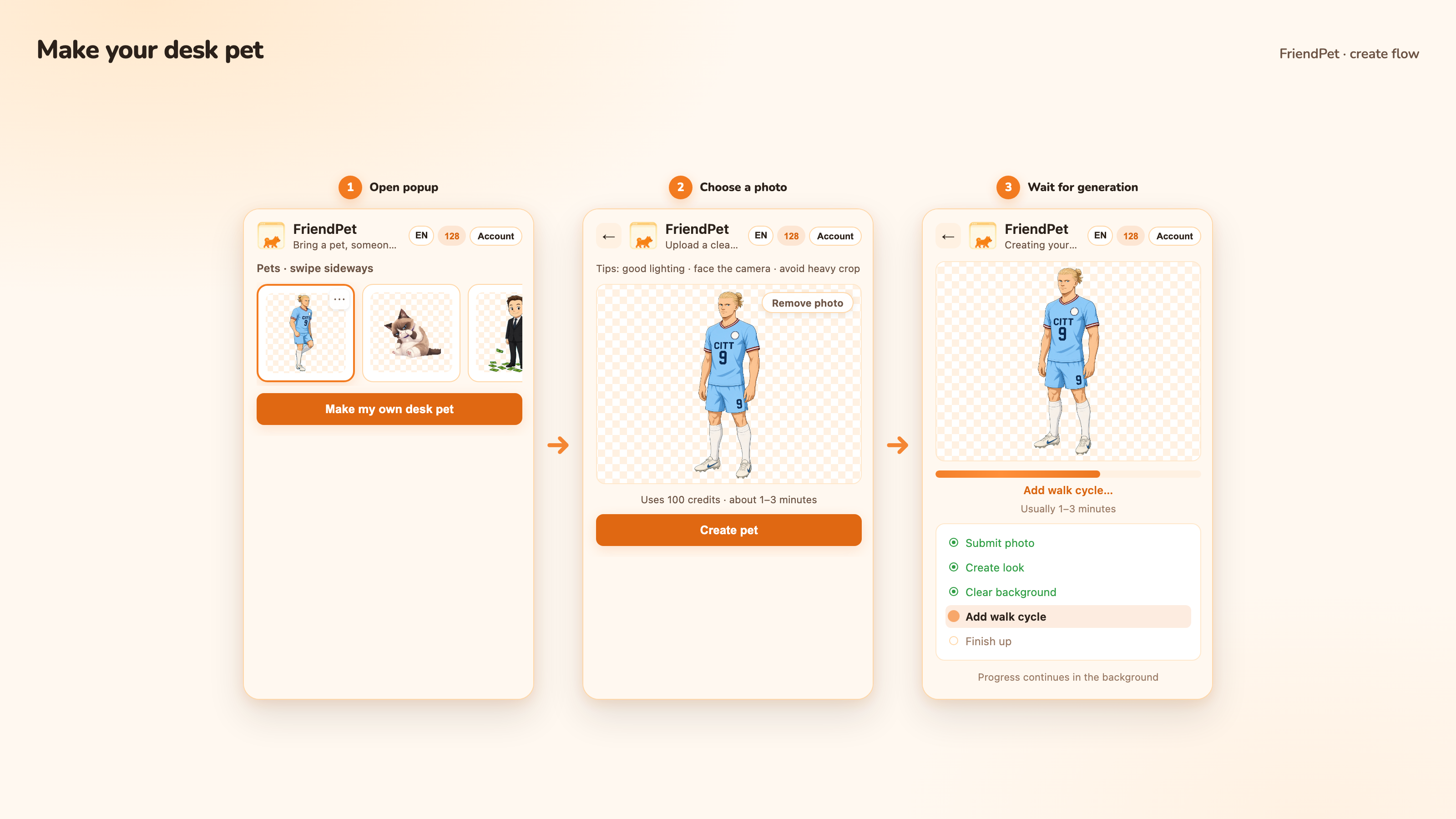
- Open FriendPet → Make my own desk pet.
- Upload a clear photo you have rights to use → Create pet.
- Wait a couple of minutes (background is fine).
Enable it on the page
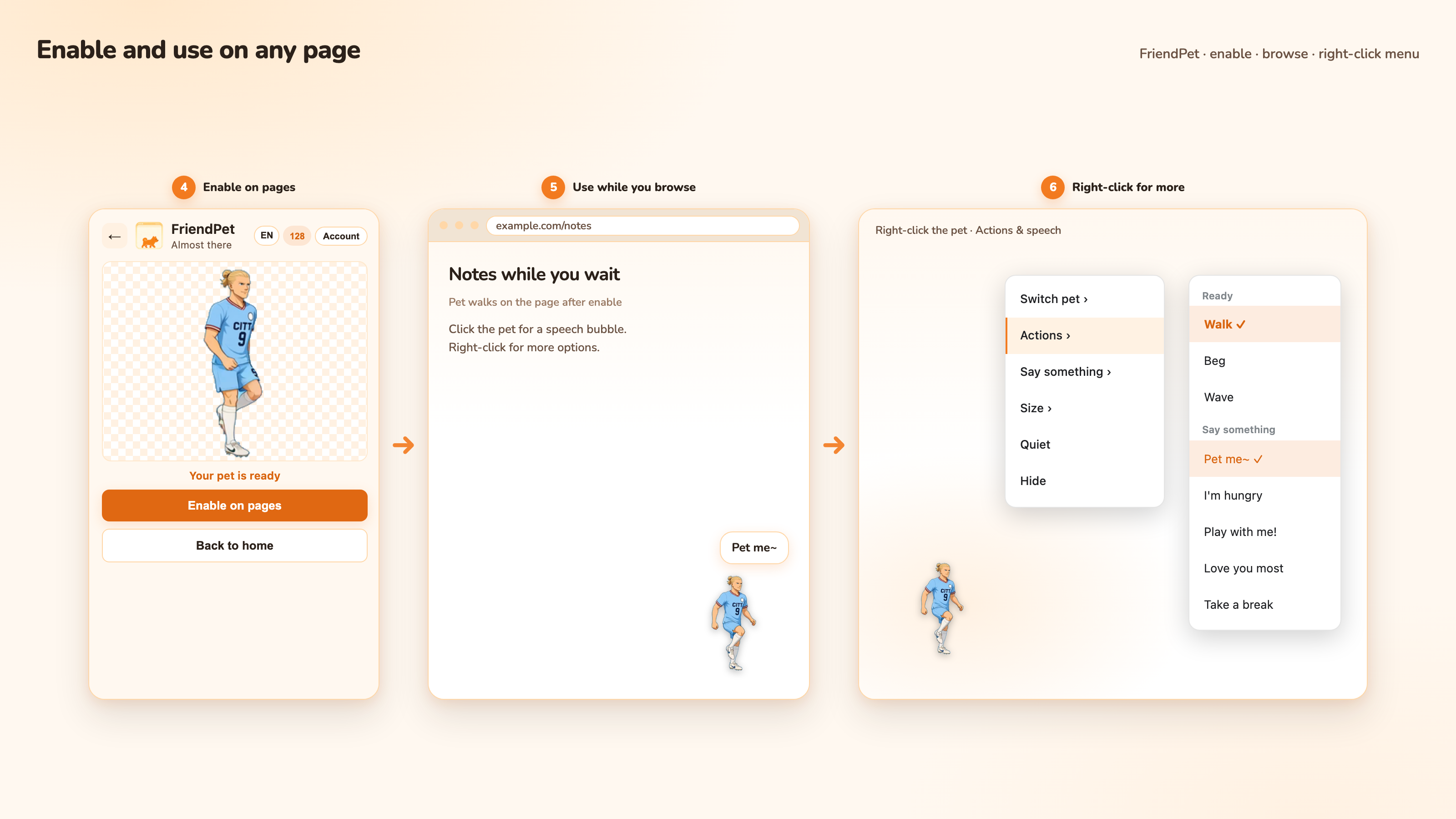
- When it is ready, Enable on pages.
- Click for a bubble; right-click for quiet mode or hide while you read eclipse maps.
Need the extension? Download it here.
Freecreate your first desk pet
FAQ
When is the total solar eclipse in 2026?
August 12, 2026. Totality crosses Greenland, Iceland, northern Russia, Spain, and a small corner of Portugal. Many other regions see a partial eclipse only.
Can I watch from the United States?
Parts of the northern U.S. (Alaska through North Carolina) see a partial eclipse. The contiguous northern tier gets a small bite — not totality. Use ISO eclipse glasses for the entire event.
What time does NASA’s live stream start?
1:15 p.m. EDT on August 12, 2026, at nasa.gov/live.
Are regular sunglasses enough?
No. Use ISO 12312-2 compliant eclipse glasses or approved solar viewers for any direct look at the partial Sun.
What about the Perseids?
The Perseid meteor shower peaks around the same nights in mid-August. It is a separate evening activity that needs dark skies — a nice bonus after eclipse day, not a substitute for safe solar viewing.
Bottom line
August 12, 2026 delivers a total solar eclipse through the North Atlantic and into Spain, plus a wide partial zone across northern North America, Canada, Europe, and northwest Africa. Know which camp you are in, protect your eyes every second of partial phase, and keep NASA’s map and live stream bookmarked. Clear skies help; certified glasses and a backup feed are the plan that works either way.